Chatbots and AI powered, predictive Computer Interfaces What is the future of Computing?
← All postsLLMs will substantially change the way we compute, meaning use technology in general. That’s a given fact for me and many others, simply based on the point that current interfaces are built around the idea that only humans can reason and think. Transformers and LLMs change that completely, and this opens up so many new doors as to how humans and technology co-exist. Notice how I didn’t say “humans use technology”, because I would want to move away from the premise of me “using” tech. Things should feel natural, and technology should move in the background.
Because currently, every time I am using my computer, I feel like this can’t be the best way we have to work, and every time I am in public transport and see everyone scrolling on their phones I feel like this can’t be the end of where technology lead us.
There are 2 camps here, about how the computer of the future will look like, and I’ve had a very interesting discussion a few days ago (January 2024). The question is – will everything evolve around a chatbot, or will a chatbot just not play a role at all when it comes to the future of computing? I see both visions, but the second one seems far more innovative. Let me explain.
The Chat Interface
“Chatbot” sounds old and rusty, and it doesn’t make justice the modern tools that we have, like ChatGPT, so in the following I will try to just say, “chat interface” for now. The vision of this camp is that things will evolve around a chat interface. This is a very promising idea, and very different from how we are computing right now. The argument here is that humans chat with each other, text is how humans evolved, how they communicated for hundreds of years, so why not. We can have an AI do things in the background, and have the answer returned when finished and explained to the user in text.
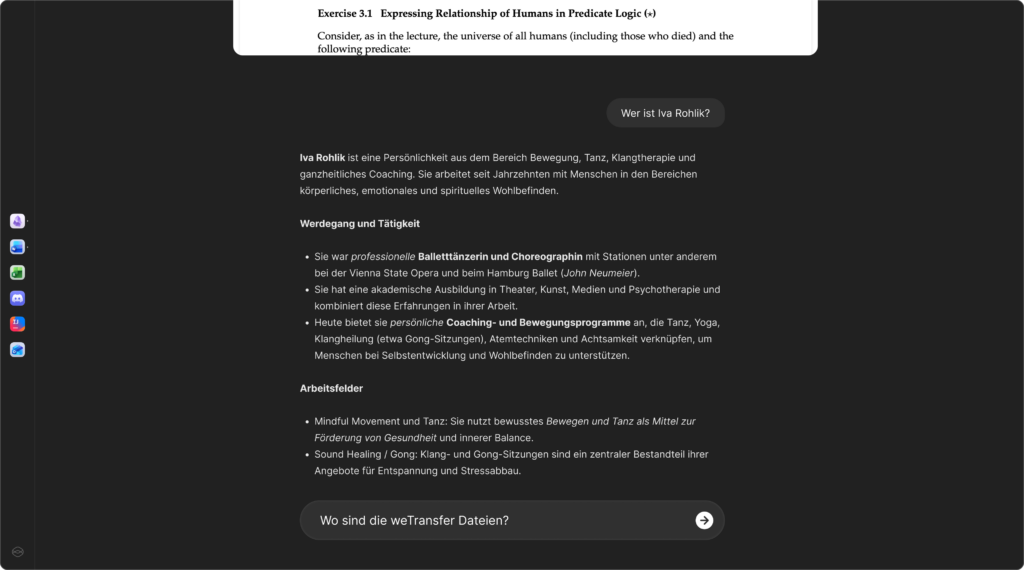
I fire up my computer and get greeted by a chat bar similar to what chatgpt.com currently is. Whatever it is I want to do, this is where I start. I want to send an email to a friend? I tell the LLM that I want to write an email, or the LLM can write it for me, all directly from that chatbar. I got a new email? The chatbot tells me! I want to check the weather? I ask in the chat. I want to plan a trip? I tell the chatbot and it creates that route. We can have some UI for different actions that is displayed in the chat history to f.ex. display the weather nicer, inline in the chat. But around all of that, it is a text based LLM. I want to see images of a specific place on that route we created earlier? I get those inline in that chat interface. Apps are API’s and they are called in the background without the user noticing. Responses don’t need to be wordy, if I ask for images in the chat I can just get them. And your computer (the LLM) gets to know you, and it will directly ask you if the by the system generated response to an email is okay to send.
We humans are used to interact with each other by words, so this should feel natural. As close as a computer can get to a human assistant. In that sense. And I am excited to be part of this future.
Interactive Computing
The other approach is the less trivial one. While I can see a clear path ahead for the first category, this is the approach that needs exploration and raffinesse. What I mean is what I would call “fluent interfaces”. We have true predictive, interactive computing that isn’t that far away from the UI that we currently have (notice I said UI, not UX). And where do I even start explaining this? Let’s work backwards.
Instead of me opening the a weather screen, or asking the chat interface for the weather, I just see get the weather when I need it on my phone? What if instead of me asking to send an email, an email draft just opens ready to be sent? What if things just open when I need them and close when I don’t? What if we can create technology that knows your habits so well that if feels like it is predicting your next action?
We spend so much time on our computer that even if we think that there’s no pattern, there has to be one, considering all my life’s context. How would it know whom I want to message to tell something, when I just sit down on my desk? Well, because I carried my iPhone around and it caught up on it.
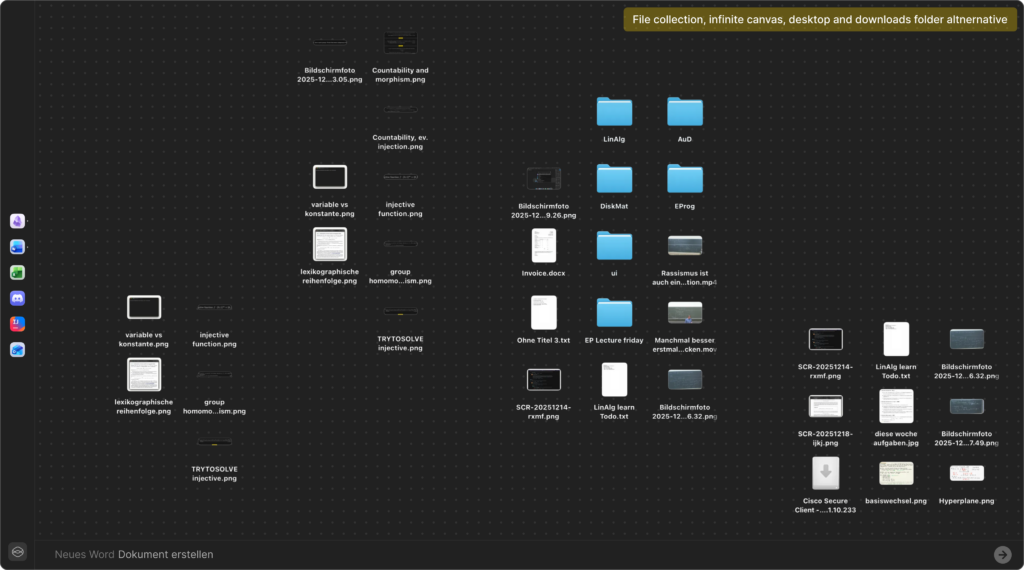
And yes, this means no chatbot, but instead a fluent interface, that is multimodal in the sense that it is dynamic, I can control it with my voice, by pointing at things with my hand or the cursor, and the system picking up these impulses and doing what I want to do, and it does it. We also have systems in the background that do things and display the output. This doesn’t mean that I am using the Figma application anymore, but it means that I have the interface on the screen and can point and tell what I want changed, and I see it change in realtime. And when I close my Laptop and head to work, it picked up that I no longer want to work on my side project. My To-Do list looks not so different from how it does right now, but it gets updated automatically, and I can tell it what to change – we have UI being augmented by language, meaning text or voice input.
Desktop operating systems (oh gosh this sounds so old fashioned) need to become a lot simpler and more dynamic for all of this to be possible. But this camp here sees the UI first, and integrates AI into the UI, instead of integrating the UI into the AI (which would be camp 1).
And maybe, we humans don’t want a chatbot, but instead something visual. Maybe it’s some stream of generative UI that is created live, but most importantly, it is visual. Yes, maybe humans want to see something when computing (aka using their computers), not just a wordsalad. Maybe we don’t want technology to be like a human assistant, but instead more … like your extension? Not sure what the word I am missing here is, but you hopefully get the point. I am even more excited to be part of this future right here.
Conclusion
What the core interface is though when we look at this predictive model still remains open. Maybe it’s a system just like what we have at the moment, just simpler. Maybe it actually is a very flexible chat interface, or a combination of both, or neither. Maybe we will barely be using screens, who knows. I am excited to be working in the field of technology, and figuring this out. The future is (once again) very exciting.
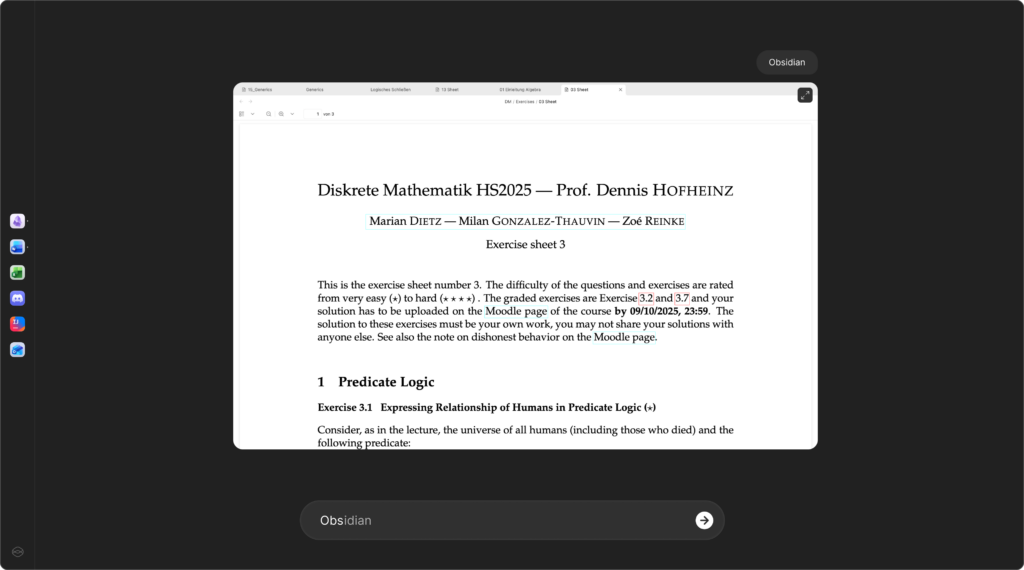
PS: on an unrelated note, this is an Ubuntu Based Desktop system that I created that uses LLM API calls to pull up actual Linux Desktop applications and make them usable in the chat. Wanted to use this place here to show this concept, I found that pretty cool. It’s not working reliably enough to publish, but I do see this as a glimpse into future computing.